

Procurement
Higher wattage panels are not automatically cheaper: the installed cost-per-watt method
Panel price per watt is the number the industry quotes and the number that misleads. What determines your installed cost is how many panels the array needs, because almost every other cost in the job scales with panel count, not with watts.
- Revision
- 1.4
- Issued
- 9 August 2026
- Reviewed by
- Set Energy technical team
- Scope
- Procurement · Solar PV · Design
- Licence
- NSW Electrical Contractor 467699C
Compare installed dollars per delivered watt, not panel dollars per rated watt. Rail, roof kits, clamps, penetrations and labour all scale with panel count, so a higher-wattage panel that removes three panels from the roof can beat a cheaper-per-watt panel — especially on tile.
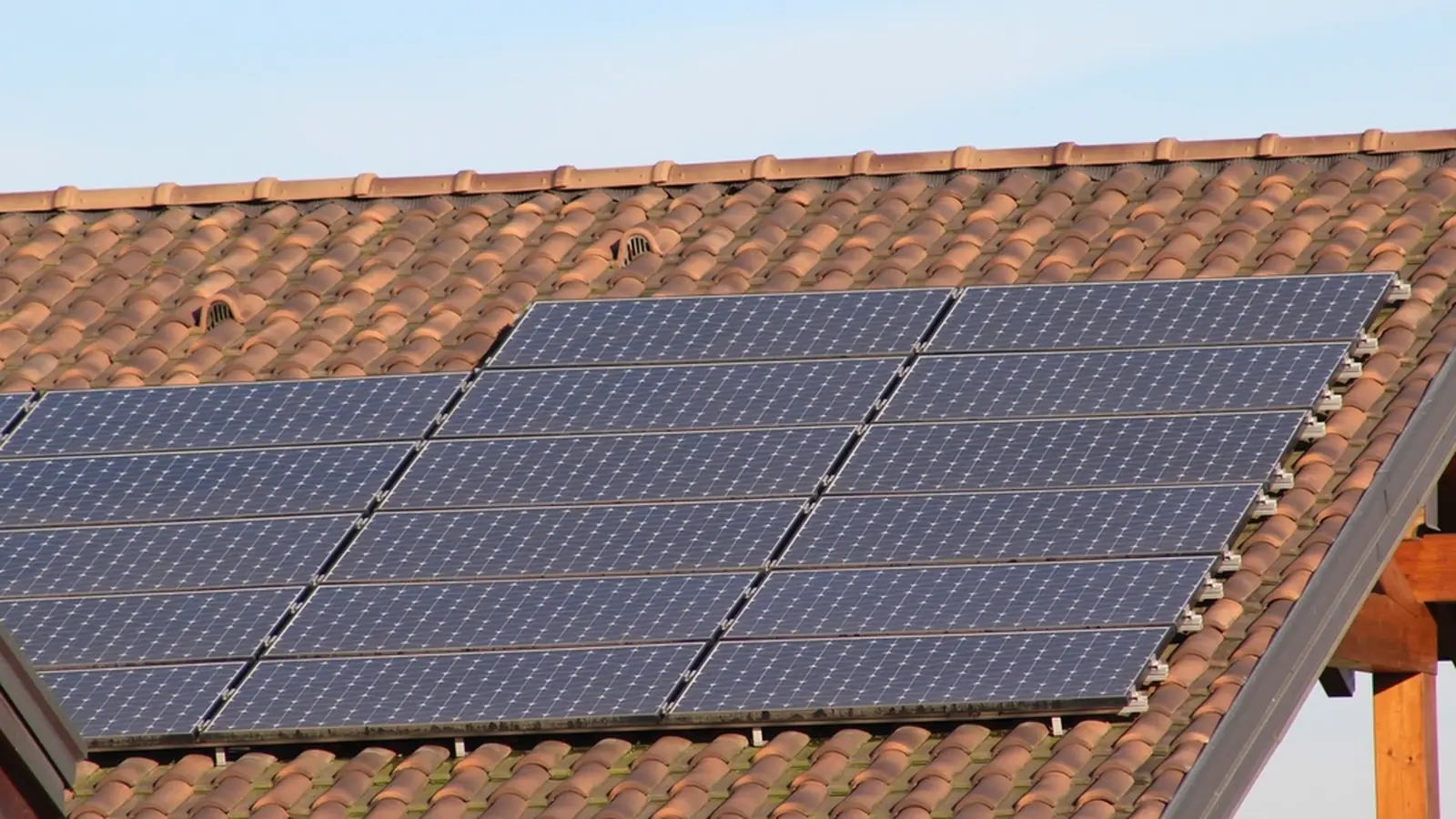
Every panel datasheet and every wholesale price list is denominated in dollars per watt. It is a convenient unit and it is the correct unit for comparing two panels sitting on a pallet. It is the wrong unit for comparing two array designs on a roof, and the gap between those two things is where a lot of money quietly goes.
The flawed premise
The implicit assumption in cost-per-watt comparison is that a watt is a watt: that 10 kW built from higher-wattage panels costs the same to install as 10 kW built from lower-wattage panels, so the cheaper panel per watt wins.
It does not. A higher-wattage panel means fewer panels for the same array size, and panel count is the variable that most of your non-panel costs actually track.
What scales with panel count, not watts
| Cost element | Scales with |
|---|---|
| Panels | Watts |
| Mounting rail | Array length — roughly panel count |
| Roof attachment kits (tin or tile) | Panel count |
| Mid and end clamps | Panel count |
| Handling and lifting labour | Panel count |
| Racking install labour | Panel count |
| Roof penetrations and flashing | Panel count |
| DC cabling and connectors | String count, roughly panel count |
| Inverter | Watts |
| AC works, isolators, switchboard | Neither — largely fixed |
| Scaffold, travel, admin, compliance | Fixed per job |
Count the rows. Most of the variable cost in a rooftop install is driven by how many rectangles you are attaching to a roof, not by their nameplate rating.
The installed-cost method
Rather than comparing panels, compare complete array designs:
- Fix the target array size in kW, or fix the available roof area.
- Calculate the panel count for each candidate panel. Round to whole panels, and to whole strings where the inverter requires it.
- Derive the mounting bill of materials from panel count: rail metres, attachment kits, clamps, splices.
- Estimate installation hours as a function of panel count and roof type.
- Add fixed costs that do not vary between the options.
- Divide total installed cost by actual delivered watts — not by the nominal target.
Installed dollars per delivered watt. Not panel dollars per rated watt.
Worked comparison: 440 W versus 475 W
The figures below are illustrative and rounded to show the method. Substitute your own current supply pricing — the arithmetic is what matters, and it will hold at any price level.
| 440 W panel | 475 W panel | |
|---|---|---|
| Panels required | 46 | 43 |
| Delivered capacity | 20.24 kW | 20.43 kW |
| Panel cost premium | baseline | +1 c/W |
| Roof attachment kits | 8 kits | 8 kits |
| Rail lengths | more | fewer |
| Clamps and fixings | more | fewer |
| Handling labour | 46 lifts | 43 lifts |
The 475 W panel carries a per-watt premium at the pallet. But it removes three panels from the roof, and with them a share of the rail, clamps, penetrations and labour. Whether the premium is recovered depends entirely on how your mounting kits are packaged and priced.
Roof kits are typically sold in fixed panel groupings. Reducing from 46 panels to 43 may or may not eliminate a whole kit. Reducing from 42 to 39 will. The saving is lumpy, not linear, and it depends on exactly where your panel count falls relative to the kit boundary. This is why the calculation has to be done per design, not once as a rule.
Roof type changes the answer
Attachment cost varies substantially by roof. Tile kits cost materially more than tin kits per panel group, and tile installation is slower and carries breakage risk. That means the value of removing a panel from the array is much higher on tile than on tin.
| Roof type | Attachment cost per panel | Value of fewer panels |
|---|---|---|
| Tin / Klip-Lok | Lower | Moderate |
| Tile | Higher | High |
| Slate or heritage | Highest | Very high |
| Ground mount | Structure-dominated | High |
| Flat roof with ballast | Frame and ballast dominated | High |
The corollary is that panel selection is not a company-wide decision. The right panel for a straightforward tin roof in a new estate may be the wrong panel for a tile roof with three orientations and a complicated set-out.
When higher wattage clearly wins regardless
- Roof-area constrained sites. If the roof physically limits the array, higher wattage is the only way to add capacity. The per-watt premium becomes irrelevant — the alternative is not a cheaper array, it is a smaller one.
- Complicated roofs. Multiple planes, dormers, obstructions. Fewer panels means fewer awkward set-outs and less time on the roof.
- Any premises where access is expensive. Scaffolding, two-storey work, restricted access. Labour hours dominate and panel count drives labour hours.
- Future expansion planned. Leaving usable roof area for a later stage has real option value.
Beyond the arithmetic
Cost per installed watt is necessary but not sufficient. Three things sit outside it and should be settled before price enters the conversation:
- Warranty terms and the entity behind them. A 25-year product warranty is worth what the warrantor is worth. Check the Australian entity, not just the brand.
- Degradation rate. A lower annual degradation rate compounds across twenty-five years and can outweigh a modest upfront difference.
- Supply continuity. A panel you cannot source in eighteen months is a warranty replacement problem and a mismatched-array problem for any future expansion.
None of that argues against running the numbers. It argues for running them on the right unit — and then treating the result as one input among several, rather than as the decision.
Common questions
Are higher wattage solar panels better value?
Sometimes. Higher wattage panels usually carry a premium per watt at the pallet but reduce panel count, which reduces rail, roof attachment kits, clamps, penetrations and labour. Whether the premium is recovered depends on how your mounting kits are packaged and what roof type you are working on.
Why is cost per watt a misleading way to compare panels?
Because most of the variable cost in a rooftop installation scales with panel count rather than watts. Two designs delivering the same kilowatts can have materially different installed costs depending on how many panels each requires.
Does roof type affect which panel I should choose?
Considerably. Tile and slate attachment kits cost more per panel and take longer to install than tin, so removing a panel from the array is worth more on those roofs. The right panel for a simple tin roof may be the wrong panel for a complex tile roof.
How do I compare two solar quotes fairly?
Convert both to total installed cost divided by actual delivered watts, not by the nominal system size, and confirm the equipment is genuinely equivalent — panel model, inverter model, racking system and warranty terms. Ignore the advertised rebate line, which can be inflated alongside the base price.
Should I fill my whole roof with panels?
Not automatically. Leaving usable roof area has real option value for a later stage, and additional generation is only worth what you can consume or export. On an export-limited connection, extra panels beyond a point deliver progressively less value.
Sources & further reading
- AS/NZS 5033 — installation and safety requirements for photovoltaic arrays
- AS/NZS 1170.2 — structural design actions: wind actions, applicable to mounting system certification
- Clean Energy Council — approved products list for modules and inverters
- Manufacturer datasheets for module dimensions, weight and degradation warranties