

Commercial
Commercial battery and BESS in NSW
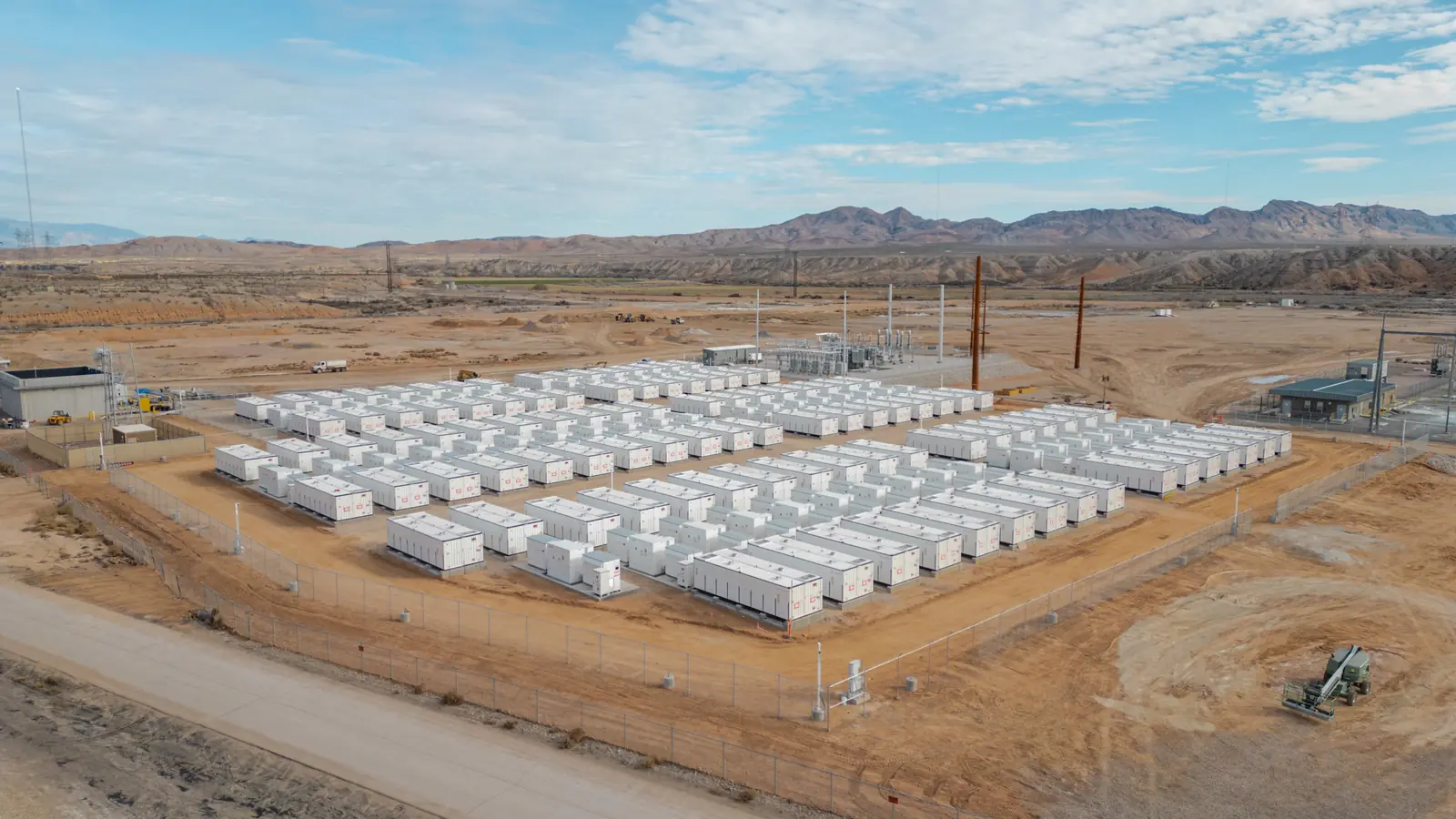
Set Energy designs and installs commercial battery systems across NSW for three jobs: shaving demand charges — often 20 to 40 per cent of a commercial bill — recovering value on export-constrained connections, and keeping critical loads running through outages. Power and energy are specified separately, because getting either wrong produces a system that cannot do its job.
Why commercial sites install storage
Commercial battery projects are driven by different economics from residential ones. The three main drivers, in rough order of how often they decide the project:
- Demand charge reduction. Demand charges bill your highest measured demand in a period and can be 20 to 40 per cent of a commercial bill. A battery can shave that peak deterministically, where solar can only do it when the sun cooperates.
- Export-constrained connections. Where the network limits or prohibits export, storage converts generation that would otherwise be curtailed into usable evening or overnight energy.
- Resilience. For cold storage, data-dependent operations, medical facilities and any process where an outage causes loss, ride-through capability has a value independent of energy arbitrage.
Sizing: power and energy are separate decisions
Residential batteries are usually chosen on capacity. Commercial systems have to be specified on both:
| Rating | Determines | Driven by |
|---|---|---|
| Power (kW / kVA) | How much demand you can shave at any instant | Peak demand profile, motor starting |
| Energy (kWh) | How long you can sustain that reduction | Duration and shape of the peak event |
A site with a short, sharp daily peak needs high power and modest energy. A site with a long evening plateau needs the opposite. Getting this wrong produces a system that either cannot shave the peak or is far larger than necessary.
Incentives for commercial storage
Under the NSW Peak Demand Reduction Scheme, business and commercial battery activities (BESS4 and BESS5) became available from 1 September 2026, and a shared-battery activity for apartment buildings of four or more dwellings (BESS3) from the same date. Data centres are excluded. Federal certificate eligibility applies to systems within the small-scale capacity bands. PDRS certificates are created by an IPART-accredited certificate provider; we work with one rather than holding accreditation ourselves.
The mechanics of both schemes are set out in the NSW battery rebate guide.
Installation considerations
- Location and fire separation under AS/NZS 5139, which frequently determines where a system can physically go.
- Thermal management — ambient temperature has a direct effect on cycle life.
- Switchboard and protection coordination with existing site infrastructure.
- Control integration with building management or process control systems where peak shaving must respond to site events.
Common questions
Can a battery reduce our demand charges?
Yes, and more reliably than solar alone. Solar reduces demand charges only when it happens to be generating strongly at the moment your peak occurs. A battery can be dispatched against the peak deterministically, which is why it is the stronger tool where demand charges dominate the bill.
What size commercial battery do we need?
Two separate figures: power rating, set by how much demand you need to shave at once, and energy capacity, set by how long the peak lasts. A short sharp peak needs high power and modest capacity; a long evening plateau needs the reverse.
Are there incentives for commercial batteries in NSW?
Yes. The NSW Peak Demand Reduction Scheme introduced business and commercial battery activities from 1 September 2026, alongside a shared-battery activity for apartment buildings of four or more dwellings. Data centres are excluded. Federal certificates apply within the small-scale capacity bands.
Will a battery keep our site running during an outage?
It can, if specified for it. That requires the system to be designed for islanded operation, sized to the loads that must keep running, and integrated with the switchboard accordingly. It is a design decision made at the start, not a setting enabled later.
Can we add a battery to an existing commercial solar system?
Yes. An AC-coupled battery works alongside existing inverters without replacing them, which is the usual retrofit path. The important step is modelling the battery against your interval data and demand charge structure rather than sizing it to the solar system — the two are separate decisions, best made together.
Get a proper assessment
Send us twelve months of bills and a photo of your switchboard and roof. We will tell you what is worth doing, in what order — including where the answer is to wait.