

Incentives
The solar “rebate” is not a rebate: how your STC discount is really calculated
There is no government cheque. There is a tradable certificate, a formula with three variables, and a market price that your installer keeps or passes on. Here is the whole calculation, so you can audit any quote in about ninety seconds.
- Revision
- 2.5
- Issued
- 9 August 2026
- Reviewed by
- Set Energy technical team
- Scope
- Rooftop solar PV · NSW · Residential and small business
- Licence
- NSW Electrical Contractor 467699C
STCs = system kW × zone rating × deeming years, rounded down. For any Sydney address in 2026 that is kW × 1.382 × 5 — a 6.6 kW system creates 45 certificates, worth roughly $1,530–$1,800 depending on the price your retailer achieves. The deeming period drops by one every 1 January until the scheme closes at the end of 2030.
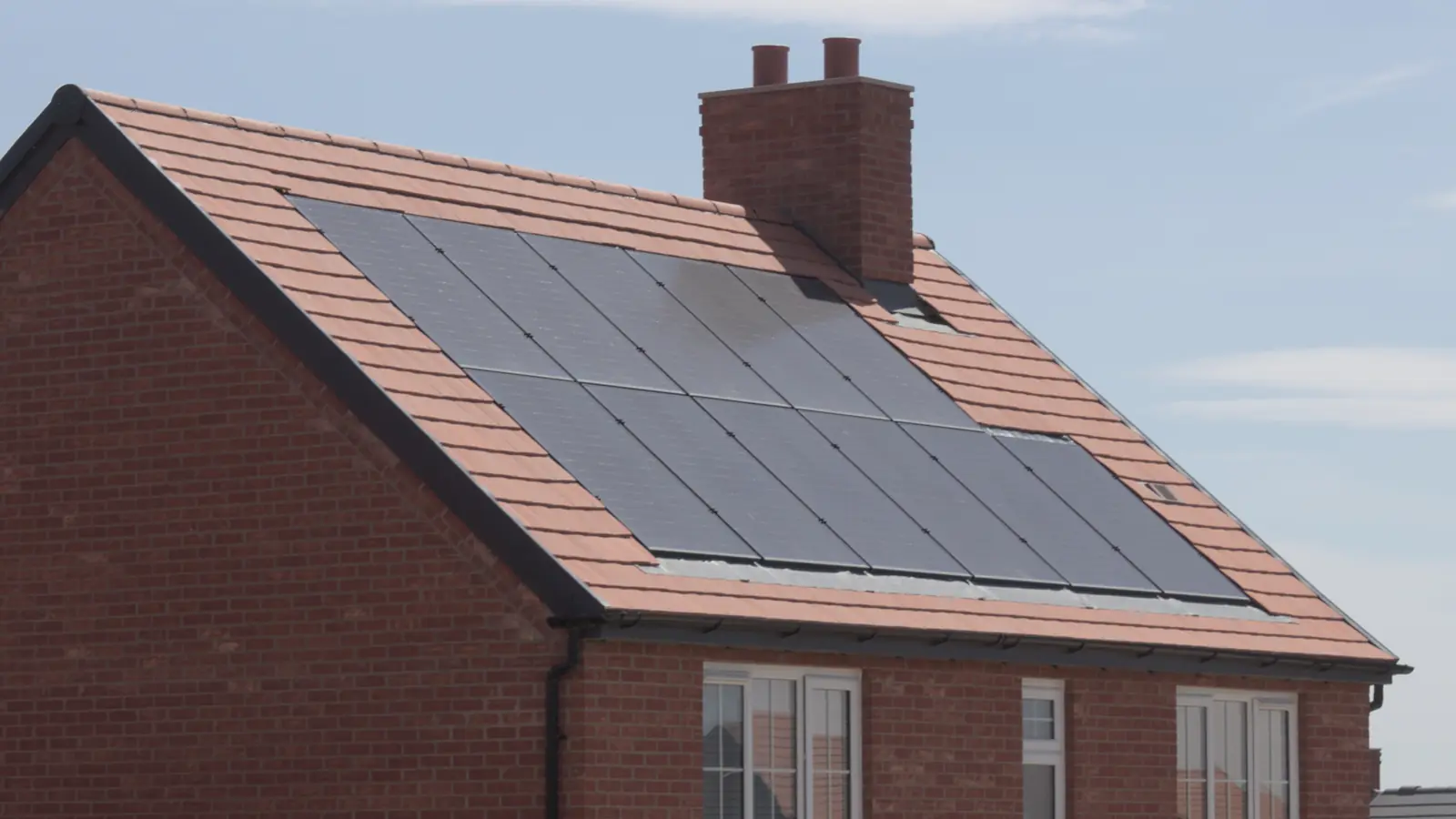
Nearly every solar quote in Australia includes a line that looks like a government rebate. It is not. It is the proceeds of a financial instrument you created and signed over to your installer. Understanding that distinction is what lets you tell a fair quote from a padded one.
Why it is not a rebate
When you install an eligible solar system, the Commonwealth allows you to create Small-scale Technology Certificates — STCs — representing the renewable electricity your system is expected to generate between now and the end of 2030. One STC represents one megawatt-hour.
You own those certificates. In practice you sign an assignment form handing them to your installer, who creates them in the regulator's registry, sells them to liable entities, and applies the proceeds as a discount on your invoice. The government never pays you anything.
This matters for three reasons. The certificate price moves, so the discount is not fixed. The installer's costs sit between the market price and your discount. And because you assign the certificates, the value is only as good as the deal you negotiated on the total installed price — a quote can inflate the headline rebate and the base price by the same amount and leave you exactly where you started.
Compare quotes on total installed price after all discounts, per kW, for equivalent equipment. A large advertised rebate on a large base price is not a discount.
The formula
Three inputs. Two of them you cannot change. The third — the price — is where quotes differ.
Your zone rating
Australia is divided into four solar zones by average irradiance. The sunnier the zone, the more generation is deemed, the more certificates per kW.
| Zone | Rating | Typical coverage |
|---|---|---|
| Zone 1 | 1.622 | Inland and northern Australia |
| Zone 2 | 1.536 | Brisbane, Perth, parts of QLD, NT and WA |
| Zone 3 | 1.382 | Sydney and almost all of NSW, Adelaide |
| Zone 4 | 1.185 | Melbourne, Hobart, Tasmania |
If you are anywhere in greater Sydney, you are in Zone 3. There is no negotiating this and no installer can improve it. If a quote for a Sydney address shows a zone rating other than 1.382, ask why.
The deeming period: the number that keeps shrinking
The SRES is legislated to close on 31 December 2030. The deeming period is simply the number of years remaining, and it drops by one every 1 January. This is the single largest driver of the year-on-year decline in solar discounts.
| Install year | Deeming years | STCs on a 6.6 kW Sydney system |
|---|---|---|
| 2024 | 7 | 63 |
| 2025 | 6 | 54 |
| 2026 | 5 | 45 |
| 2027 | 4 | 36 |
| 2028 | 3 | 27 |
| 2029 | 2 | 18 |
| 2030 | 1 | 9 |
| 2031 | 0 | Scheme closed |
Note that the proportional loss accelerates. Going from 5 years to 4 years is a 20% reduction in certificates. From 2 to 1 it is 50%. The scheme does not stop in 2030 — it thins out steadily until it does.
The certificate price
STCs trade on an open market. The Clean Energy Regulator operates a Clearing House at a fixed $40 per certificate excluding GST, which acts as a soft ceiling. In practice most certificates are sold through agents at a discount to that, because the Clearing House can carry a queue and because creating and validating certificates costs money.
A retailer modelling somewhere in the high $30s is being realistic. A quote showing the full $40 as your discount is showing you the theoretical maximum, which is a marketing decision rather than a pricing one.
Worked example: 6.6 kW in Parramatta, installed 2026
That $270 spread is roughly the difference between two quotes that both claim to pass on “the full rebate”. It is real money, but it is small relative to the difference good and bad equipment makes over twenty years. Do not let the rebate line drive the decision.
Auditing a quote in ninety seconds
- Check the system size used. STCs are calculated on the DC panel rating, not the inverter rating. A 6.6 kW array on a 5 kW inverter creates certificates on 6.6 kW.
- Check the zone. NSW is 1.382 almost everywhere.
- Check the deeming years against the install year, not the quote year. A December quote for a January install uses next year's figure.
- Recalculate. kW × 1.382 × deeming years, round down. If the quote's STC count is higher than yours, something is wrong.
- Divide the discount by the STC count to get the implied certificate price. Above $40 is not possible.
- Ignore all of it and compare total installed price per kW for equivalent panels, inverter and racking.
Quotes that show the STC discount but not the pre-discount price. Without the base figure the rebate line is unverifiable, and it is the oldest trick in the industry.
The 100 kW threshold
STCs are for small-scale systems. Once a system exceeds 100 kW it moves out of the SRES entirely and into the Large-scale Renewable Energy Target, earning Large-scale Generation Certificates instead. LGCs are created annually on actual metered output rather than deemed upfront, which changes the cash-flow profile of a commercial project completely.
This creates a genuine discontinuity in commercial project economics around the 99 kW mark. We cover it properly in commercial solar payback in NSW.
What happens after 2030
No new STCs will be created after 31 December 2030. Certificates already created remain valid, and existing systems keep operating exactly as before — nothing is switched off. What ends is the upfront discount.
Whether solar remains worth installing after that is a different question with a straightforward answer: panel and inverter prices have fallen faster than the subsidy has, and retail electricity prices have not fallen at all. The subsidy has been accelerating a decision that increasingly stands up on its own.
Common questions
How many STCs will my solar system get in 2026?
Multiply the DC panel rating in kW by your zone rating (1.382 for virtually all of NSW) by the deeming period, which is 5 years for a 2026 install, then round down. A 6.6 kW Sydney system creates 45 STCs.
Is the solar rebate ending?
It is shrinking rather than ending abruptly. The deeming period drops by one year every 1 January, so certificate counts fall each year until the Small-scale Renewable Energy Scheme closes on 31 December 2030.
What is an STC actually worth?
The Clean Energy Regulator's Clearing House price is fixed at $40 excluding GST, but most certificates trade below that on the open market. After creation and administration costs, retailers typically realise somewhere in the high $30s, which is what a realistic quote will model.
Do STCs depend on my inverter size or my panel size?
Panel size. Certificates are calculated on the DC rating of the array. This is why a 6.6 kW array paired with a 5 kW inverter — a common and legitimate configuration — creates certificates on 6.6 kW.
Does a bigger system always mean proportionally more STCs?
Yes, up to 100 kW. Above that the system leaves the small-scale scheme entirely and creates Large-scale Generation Certificates instead, which are earned annually on metered output rather than deemed upfront.
Should I rush to install before 1 January?
Crossing a year boundary costs you one deeming year, which is roughly a 20% reduction in certificates at the 2026 rate. That is real but bounded. It is not a reason to accept a poorly specified system, and installation must actually be complete — not merely booked — to claim the current year's rate.
Are solar STCs and the battery rebate the same thing?
Same certificate type, different rules. Solar STCs are calculated on system size, zone and deeming period as this guide describes. The federal battery discount also pays in STCs but on usable storage capacity with its own banded factor — covered in our NSW battery rebate guide. One install with both solar and battery earns both, calculated separately.
Sources & further reading
- Clean Energy Regulator — Small-scale Renewable Energy Scheme: STC calculation, postcode zone ratings and deeming period
- Clean Energy Regulator — STC Clearing House and benchmark certificate price
- Renewable Energy (Electricity) Act 2000 and associated regulations — scheme close date of 31 December 2030