

Residential
Residential solar installation in Sydney and NSW
Set Energy designs, supplies and installs grid-connected rooftop solar across Greater Sydney and New South Wales. Every installation includes a site assessment, system design, a network pre-approval lodged before you pay a deposit, installation by licensed electricians and accredited installers to AS/NZS 5033 and AS/NZS 4777, and a Certificate of Compliance for Electrical Work.
What is included
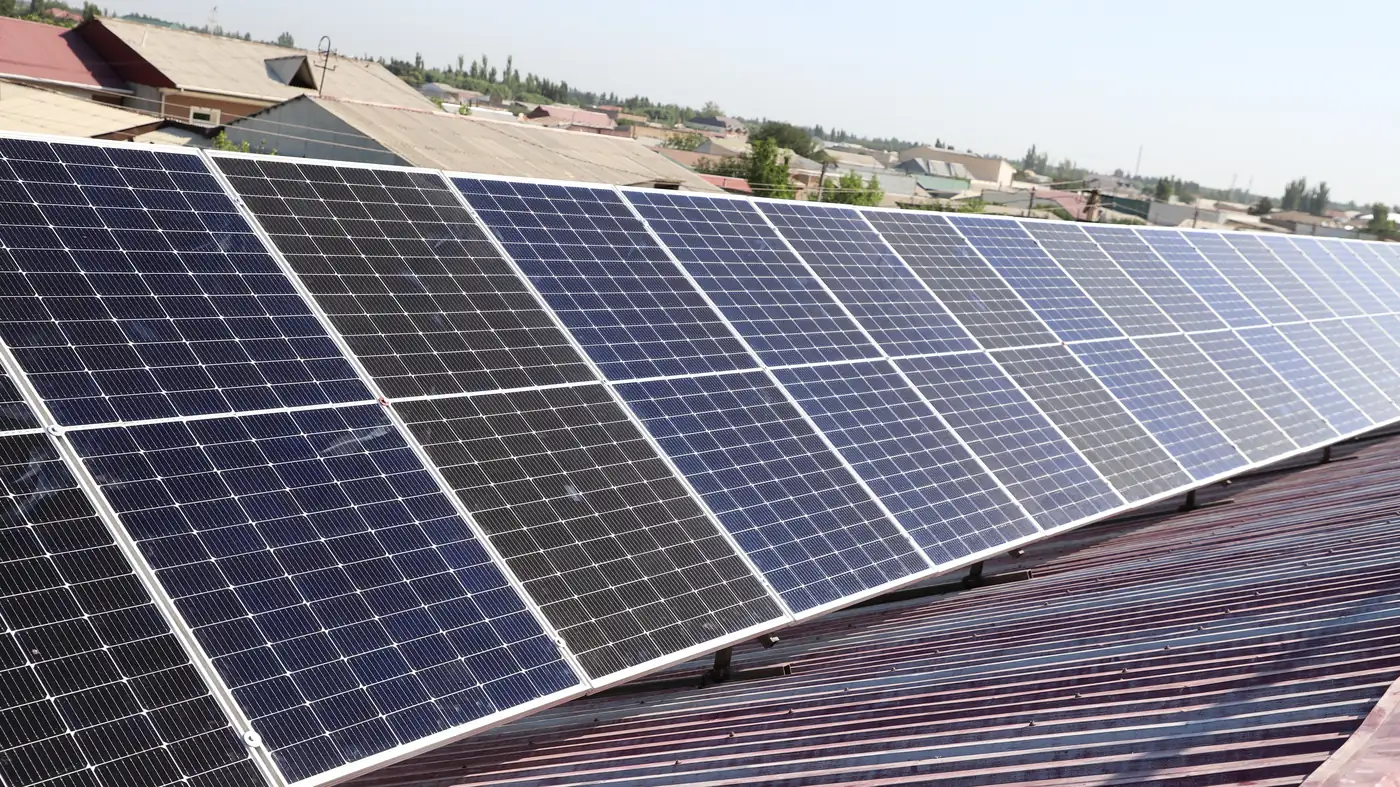
A residential installation from Set Energy covers site assessment, system design, network pre-approval, supply, installation, commissioning and the compliance paperwork that makes the system legal and claimable.
- Site assessment — roof structure and condition, orientation, shading, switchboard capacity and existing wiring.
- Design — array layout and string design, inverter selection and sizing, DC to AC ratio set for your roof rather than to a template.
- Network pre-approval — lodged with Ausgrid, Endeavour Energy or Essential Energy before installation, so the approved export limit is known before you commit.
- Installation by licensed electricians and accredited installers, to AS/NZS 5033 and AS/NZS 4777.
- Compliance — Certificate of Compliance for Electrical Work, STC assignment and creation, retailer and network notification, meter reconfiguration follow-up.
Sizing and system design
The array is sized to your consumption and roof, not to a package. Where a household is planning a battery or an EV within a few years, we design the first stage so the second one does not require rework — string layout, inverter selection and switchboard provision all matter here.
Panel selection is made per job. The right module for a straightforward tin roof is frequently not the right module for a complex tile roof with three orientations. Our reasoning is set out in the installed cost-per-watt method.
What affects your price
| Driver | Effect |
|---|---|
| Roof type | Tile and slate cost more to attach than tin and take longer |
| Storeys and access | Two-storey and restricted-access sites need additional safety provision |
| Number of roof planes | More planes means more set-outs, more rail runs and often more strings |
| Switchboard condition | Older boards frequently require upgrade before connection |
| Cable run length | Distance from array to inverter to switchboard affects cable sizing |
| Single or three phase | Determines inverter options and approved export limit |
Incentives
Rooftop solar in NSW attracts Small-scale Technology Certificates, applied as an upfront discount. The certificate count is set by a formula you can verify yourself — system size, zone rating and the deeming period. We show the STC count and the assumed certificate price as separate lines on every quote. The full method is in the STC guide.
Common questions
How long does a residential solar installation take?
The physical installation on a typical single-storey home is generally one day. The overall timeline is driven by network pre-approval and scheduling rather than by the install itself, and varies with distributor processing times.
Do I need to be home during installation?
Someone needs to provide access and there will be a short interruption to supply while the switchboard work is done. You do not need to be present for the whole day.
Will solar work with my existing switchboard?
Often, but not always. Older boards may lack space for the required protective devices or may not meet current requirements. This is assessed before quoting so any upgrade appears in the price rather than as a variation later.
What happens if my roof needs replacing later?
The array has to be removed and reinstalled, which is a real cost. If your roof is nearing the end of its life, it is almost always cheaper to re-roof first. We raise this at assessment rather than after installation.
How much does rooftop solar cost in NSW?
Installed price is driven more by the site than by the panels: roof type, storeys and access, number of roof planes, switchboard condition, cable runs, and single versus three phase. The STC discount — system size × zone rating 1.382 × the deeming period — then comes off that price and is shown as its own line on our quotes. Current package pricing is published on Set Solar; this page and our guides explain how to verify any quote you receive, from anyone.
What size solar system do I need?
Start with the arithmetic: a kilowatt of panels generates roughly 4.5 kWh a day on a well-oriented Sydney roof averaged over a year, so daily consumption divided by 4.5 is the array that matches your usage — a 20 kWh-a-day household is around 4.4 kW, not 20 kW. From there the answer moves on how much you use during daylight, your approved export limit, your roof area and orientation, and any planned battery or EV, all of which are reasons the recommendation is often larger. Send twelve months of bills and we will show the working — including where a smaller system is the better investment. The full method is in our sizing section.
Why is the inverter smaller than the panel array?
Because an array almost never produces its rated output. Panel watts are measured in a laboratory at a 25 °C cell temperature; a roof in Sydney runs far hotter than that, at an imperfect angle, with some dust on it. Matching a 13.2 kW inverter to a 13.2 kW array would mean paying for conversion capacity that sits idle every day for twenty years. For systems claiming STCs the array may be oversized up to 133% of the inverter rating, and a ratio in that band is normal, deliberate design — explained in full in our guide to how a system works.
Why does my 6.6 kW system never show 6.6 kW?
Nameplate is a laboratory figure. On a clear day a healthy 6.6 kW array peaks at roughly three-quarters of it, once cell temperature, orientation, soiling, cable losses and inverter conversion are accounted for. Seeing around 4.9 kW at the best moment of a hot afternoon is the system working as designed, not a fault — the arithmetic is set out in our fundamentals guide.
Is solar still worth installing in 2026?
For most Sydney roofs, yes. A typical 6.6 kW system still creates 45 STCs in 2026, hardware prices have fallen faster than the subsidy has declined, and self-consumed energy offsets usage at your full import rate. Where the honest answer is “not yet”, it is usually shading, roof condition or a switchboard that needs work first — which is what the assessment is for.
Get a proper assessment
Send us twelve months of bills and a photo of your switchboard and roof. We will tell you what is worth doing, in what order — including where the answer is to wait.